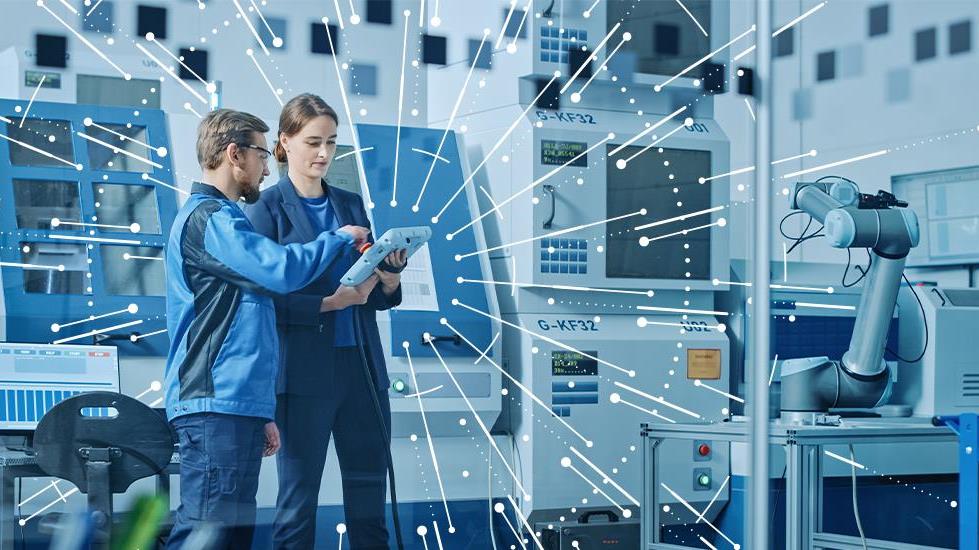
Manufacturing is in the midst of a digital revolution. Advances in robotics, increasing automation, improved sensors, the internet of things(IoT) and asset tracking technologies have all contributed to an industry wide transformation.
At the core of this transformation is data. There is an incredible amount of information being generated at every level of the manufacturing process, and the number of connected devices within manufacturing centers is expected to triple over the next 5 years. Protecting this data and the systems that rely upon it is critical, as any data breach could cause major disruptions to a facility’s production capacity. To maintain operations, it is critical that information systems are protected and sufficiently backed up.
Cyber Attacks:
The threat of cyber attacks on manufacturing companies has never been greater. In 2021, manufacturing companies were the primary target for ransomware attacks. The manufacturing sector suffered the highest number of attacks ever in 2021 and for the first time in 5 years the number of cyber incidents in manufacturing have, exceeded that of the insurance and financial sectors.
Ransomware alone costs companies over $20 billion in 2021 with these costs expected to exceed $265 billion annually by 2031. The average losses incurred by manufacturing facilities due to a successful ransomware attack exceeded $1.5 million.
Natural Disasters:
No one can predict when a natural disaster will strike. When disasters do strike, it is crucial that your company can continue operations as seamlessly as possible. Data protection is no exception. If your company’s data is stored at a single location, they risk losing it entirely. While it is impossible to prevent a natural disaster from occurring, it is easy to protect your company’s data. Having backups stored in multiple physical locations creates redundancy, allowing your company to retrieve their lost data from another location that has not been impacted.
Compliance:
Is your company SOX compliant? Federal law mandates that public companies have a data backup and recovery plan in place to protect the company’s financial data. In order for a plan to be compliant, it must address the frequency, storage location, and the testing of backups.
Veeam:
Veeam provides organizations with scalable backup technology as well as robust data protection. Veeam encourages the use of the 3-2-1 rule: have 3 copies of the data stored; 2 different storage media; and 1 copy located off site. Veeam is able to reduce if not eliminate system downtime through its Veeam Availability Suite.
Rojan Data Protection Solutions:
Rojan’s data protection services have a proven track record. Rojan works with both small and large manufacturers. Utilizing Veeam, Rojan is able to provide manufacturers with data backup solutions that can significantly reduce operational downtime and ensure SOX compliance.