
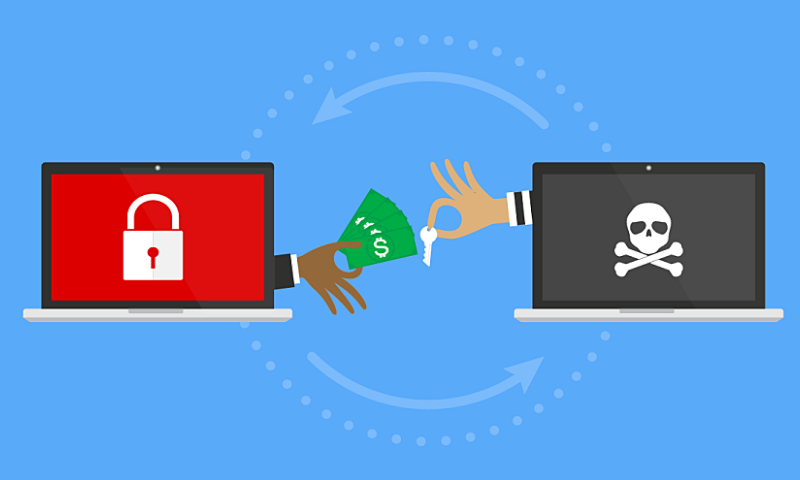
Ransomware is one of the fastest-growing cybersecurity threats today, and its stats are alarming.
Ransomware cost the world $20 billion in 2021 alone. This figure is expected to sit at $265 billion in 2031.
Aside from the ransom itself, these attacks interrupt business operations and are very injurious to a company’s brand.
If the current trends are anything to go by, a ransomware attack might be a matter of when. Not if. Here are some best practices to prepare your business for a future ransomware attack.
Employee Education
Making ransomware protection an IT function is a recipe for disaster. While your IT department is an integral part of your safety, ransomware protection should be every employee’s responsibility.
For starters, 95% of malware are initiated by a phishing email to an unsuspecting employee. This is also the most common method in ransomware.
Such an email tricks a user to click a malicious link or open an attached document. This then acts as a downloader allowing the attacker to infect the computer with ransomware.
Your first line of defense is sensitizing employees on how to recognize a potential attack and the actions to take to minimize your organization’s exposure.
Patching Systems
Ransomware exploits unpatched systems in multiple ways.
An excellent example of this is the WannaCry malware, known for using the SMB protocol to create a wormable ransomware variant. Still, ransomware can also elevate privileges by exploiting resources behind the scenes. This facilitates attackers to take more actions on infected machines.
If the WannaCry outbreak taught us anything, it’s the need to have patches whenever they’re available. In this instance, the patch was available from March, while the attacks commenced in May 2017. Consequently, affected machines only fell victim because of the failure to apply patches that were already available for known vulnerabilities.
Maintaining Security Solutions
Most companies today have deployed some security solutions on their systems. However, these are only effective if they are correctly maintained and updated.
A good example of this is an antivirus. For optimal effectiveness, an antivirus needs to be updated regularly. It also needs to perform scans regularly.
If you fail to update it, the antivirus lacks access to the information necessary for detecting the latest threats. On the other hand, if it does not scan, the antivirus is useless, as you are not using it for its intended purpose.
Because antivirus updates and scans can be bothersome, you can set them to be performed manually. Doing this and ensuring firewalls are not turned off, combined with other security hygiene rituals, can keep you considerably safe.
Automate Backups
Businesses today are highly data-driven. So much so that losing access to your information can paralyze your business indefinitely. Ransomware relies on the target not having back-ups.
If an attacker manages to encrypt your only copy, they have the upper hand in the negotiation, and you might be willing to pay the ransom.
Automated backups ensure that you lose very little in an attack. If all organizations took this seriously, they would better protect themselves, minimize monies paid for ransomware, and ultimately even force attackers out of business.
The Bottom-line
Ransomware will remain a potential threat for as long as they remain profitable.
At Rojan, we understand that security can be intimidating. For this reason, we offer businesses like yours managed cyber security solutions. These guard you from attacks and help you recover your data should you fall victim. Sounds like a plan? Call us today!